- Open:Weekdays: 8:30 am – 5:30 pm, Saturdays: 9:00 am-2:00 pm
- Email: info@youdrugmart.com
- Follow:
-

-


Mirena, Kyleena, and Nexplanon are long-acting reversible contraceptives (LARCs) that provide highly effective pregnancy prevention for several years. Mirena and Kyleena are hormonal intrauterine devices (IUDs) that doctors place inside the uterus, while Nexplanon is a hormonal implant that we insert under the skin of the upper arm. Although all three release the progestin levonorgestrel (or a related progestin in Nexplanon), they differ in placement, duration, hormone dose, bleeding patterns, and non-contraceptive benefits.
We place this hormonal IUD inside the uterus.
It releases levonorgestrel.
Approved for pregnancy prevention and treatment of heavy menstrual bleeding.
Finally, it is effective for up to 8 years.
We place this hormonal IUD inside the uterus.
It is smaller than Mirena.
Releases a lower dose of levonorgestrel.
Lastly, it is effective for up to 5 years.
We place this small flexible implant under the skin of the upper arm.
it releases etonogestrel, which is a progestin hormone.
Finally, Nexplanon is effective for up to 3 years.
Mirena: Inserted into the uterus during an office procedure.
Kyleena: Also inserted into the uterus, but has a smaller frame.
Nexplanon: On the contrary, this goes beneath the skin of the upper arm.
Mirena: Higher levonorgestrel dose.
Kyleena: Lower levonorgestrel dose.
Nexplanon: Uses etonogestrel rather than levonorgestrel.
Mirena: Up to 8 years.
Kyleena: Up to 5 years.
Nexplanon: Up to 3 years.
Mirena: More likely to significantly reduce menstrual bleeding or stop periods altogether.
Kyleena: May reduce bleeding, though periods often continue.
Nexplanon: This in contrast can cause unpredictable bleeding patterns, including spotting, prolonged bleeding, or absent periods.
Patients with heavy menstrual bleeding often benefit from Mirena because of its FDA-approved indication for reducing heavy periods. On the other hand, patients who have never been pregnant or prefer a smaller IUD may consider Kyleena.
Similarly, those who prefer avoiding uterine procedures or want an arm implant may choose Nexplanon.
All three methods are more than 99% effective at preventing pregnancy.
Fertility generally returns quickly after removal.
None of these methods protects against sexually transmitted infections (STIs).
Selection should be individualized based on reproductive goals, menstrual concerns, medical history, and patient preference.

One of the most common questions I hear from patients during family planning consultations is: “Which is better – Mirena, Kyleena, or Nexplanon?” The right choice depends on your body, your menstrual history, your future pregnancy plans, and what side effects you are willing to tolerate.
We see patients who absolutely love Mirena because it nearly eliminated their heavy periods. On the contrary, others prefer Kyleena because of its smaller size and lower hormone exposure. However, some may also choose Nexplanon simply because they are uncomfortable with the idea of an intrauterine device and prefer an implant in the arm.
Understanding the differences can help patients make informed decisions rather than relying on social media opinions or anecdotal stories.
Mirena, Kyleena, and Nexplanon belong to a category known as long-acting reversible contraceptives, often called LARCs.
These methods provide highly effective pregnancy prevention without requiring daily pills, weekly patches, or monthly injections.
What makes LARCs particularly attractive is their combination of effectiveness, convenience, and reversibility. Once removed, fertility generally returns rapidly.
In my clinical experience, patients who struggle with remembering daily contraceptive pills often report much greater satisfaction with LARC methods.
Mirena is a hormonal IUD that sits inside the uterus and continuously releases levonorgestrel.
It prevents pregnancy through several mechanisms:
One major advantage of Mirena is its ability to reduce heavy menstrual bleeding. Many patients notice substantially lighter periods after several months of use, while some eventually stop having periods altogether.
From a physician’s perspective, Mirena is often my preferred option for women who have heavy menstrual bleeding, anemia, or painful periods.
Kyleena functions similarly to Mirena but contains a lower amount of levonorgestrel and uses a smaller device.
This smaller size may make insertion easier for some patients, particularly younger women or those who have never been pregnant.
Patients sometimes assume that lower hormone content means fewer side effects, but individual responses vary significantly.
In practice, I often discuss Kyleena with patients who want an IUD but are concerned about the size of the device or prefer a lower-dose hormonal option.
While Kyleena can reduce menstrual bleeding, it generally does not suppress periods as frequently as Mirena.
Nexplanon differs completely from Mirena and Kyleena because it is not an IUD.
Instead, it is a small rod that goes under the skin of the upper arm.
The implant releases etonogestrel, which primarily works by:
Many patients appreciate that insertion and removal are relatively quick office procedures that do not involve the uterus.
However, the most common reason patients request Nexplanon removal is irregular bleeding.
As a clinician, I find that counseling about bleeding patterns before insertion is critical. Patients who understand this possibility ahead of time are usually much more satisfied with the method.
One of the biggest practical differences among these options is how they affect periods.
Many patients experience:
Patients commonly experience:
Bleeding patterns can be unpredictable:
In short, menstrual expectations often influence contraceptive choice more than pregnancy prevention itself.
You can use Mirena and Kyleena with a minor in office gynecologic procedure, while Nexplanon needs a brief subdermal arm procedure. Trained clinicians take care of all three procedures in a procedure room. All of them typically take only a few minutes.
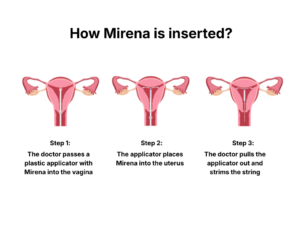
A clinician places a speculum in the vagina, cleans the cervix, and stabilizes it with a tenaculum. They measure the uterus, load the IUD into a thin insertion tube, and advance it through the cervical canal. Once the device reaches the top of the uterus, they release it and trim the strings. This process takes only a few minutes and may cause brief cramping.
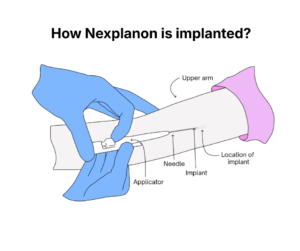
A clinician marks the insertion site on the inner upper arm, numbs the skin, and uses a preloaded applicator to slide the implant just under the skin. Doctors insert the needle at a shallow angle, advance it fully, and release the implant. Then, bandage the site, which will heal within a few days.
Insertion fees vary. Some provinces (e.g., BC) cover insertion fully for insured patients, but clinics report that uninsured insertion fees can be around $325 for IUDs. Manitoba’s fees are typically similar, and many patients pay only the device cost if insured.
All three methods are among the most effective contraceptives available.
Pregnancy rates remain below 1% annually, making them significantly more effective than typical use of birth control pills.
Because these methods eliminate user error, they maintain consistent effectiveness throughout their lifespan.
For busy professionals, students, and mothers juggling multiple responsibilities, this “set it and forget it” approach is often a major advantage.
Although generally safe, each option carries potential side effects.
Possible side effects include:
Possible side effects include:
Most side effects improve over time, but individual experiences vary considerably.
As physicians, we avoid recommending one option universally.
Instead, we typically match the method to the patient’s goals:
The best contraceptive is often the one that fits the patient’s lifestyle and preferences rather than the one with the most impressive statistics.
In conclusion, Mirena, Kyleena, and Nexplanon are all highly effective long-acting reversible contraceptives, but they differ in placement, hormone dosage, duration, and menstrual effects.
Mirena is often preferred for heavy menstrual bleeding and offers the longest duration. Kyleena provides a smaller, lower-dose IUD option. Nexplanon offers excellent contraception without requiring uterine placement but may cause more unpredictable bleeding.
As a physician, patient satisfaction is highest when counseling focuses not only on effectiveness but also on realistic expectations about periods, side effects, and long-term goals. The best choice is ultimately the one that aligns with a patient’s individual needs and preferences.
Yes. All three methods are generally considered safe for breastfeeding mothers and do not significantly affect breast milk production. Many healthcare providers recommend these long-acting contraceptives during the postpartum period because they offer reliable pregnancy prevention without requiring daily medication.
The device does not suddenly stop working on the expiration date, but its effectiveness may gradually decline afterward. Patients should schedule a replacement or discuss alternative contraception with their healthcare provider before the approved duration ends to maintain continuous pregnancy protection.
Absolutely. These contraceptives can be removed at any time if a patient wishes to become pregnant, experiences side effects, or simply decides to switch methods. Removal is usually performed in a clinic setting and typically takes only a few minutes.

