- Open:Weekdays: 8:30 am – 5:30 pm, Saturdays: 9:00 am-2:00 pm
- Email: info@youdrugmart.com
- Follow:
-

-


Did you know inhalers rank among the most frequently prescribed medication categories in primary care, respiratory medicine, and emergency settings in Manitoba? This is because of the prevalence of asthma and chronic obstructive pulmonary disease (COPD). A recent statistical report indicates that 77,321 Manitobans aged 12 years and above, or 13.11% of the population, live with asthma. Similarly, 12.1% of residents aged 35 years and older live with diagnosed COPD. Administrative databases also estimate nearly 57,000 COPD cases across Manitoba’s regional health networks. That is why, knowledge of main type of inhalers, and understanding the difference between rescue inhalers, maintenance inhalers, and anticholinergic inhalers can help patients use their medications more effectively.
Despite the high demand for all type of inhalers, physicians still find that many patients recognize only the colour of their inhaler rather than its purpose. Most can point out their “blue puffer” instantly, yet may not know when to use their maintenance or rescue inhaler, or even which one they were prescribed. Therefore, understanding the different type of inhalers can help patients use them correctly and gain better control of their respiratory condition.

Most inhalers fall into one of two broad categories: rescue inhalers and maintenance inhalers. However, anticholinergic inhalers are also another important medication class that may function as either short-term symptom relief or long-term maintenance treatment, depending on the specific product.
Rescue inhalers provide rapid symptom relief when breathing becomes difficult. They work by quickly relaxing airway smooth muscle and opening narrowed airways.
These medications are generally used when a person develops sudden wheezing, chest tightness, coughing, or shortness of breath. However, they are not designed to replace regular controller treatment in people with persistent asthma or COPD.
Maintenance inhalers are taken regularly, even when symptoms are absent. This is because, their purpose is to reduce inflammation, keep airways open, and prevent future flare-ups.
One of the most common mistakes physicians see is patients relying heavily on rescue inhalers while neglecting their controller medications. While rescue inhalers provide quick relief, maintenance inhalers often do the heavy lifting in preventing disease progression and exacerbation.
Anticholinergic inhalers are another important group of breathing medications. Unlike beta-agonist inhalers such as salbutamol, they work by blocking acetylcholine, a chemical messenger that can cause airway muscles to tighten and increase mucus production.
By blocking this effect, anticholinergic inhalers help relax the airways and make breathing easier. They are used most commonly for COPD, including chronic bronchitis and emphysema, but may also be used alongside other inhalers during asthma flare-ups or in selected asthma patients.
Furthermore, anticholinergic inhalers are divided into short-acting and long-acting types. Short-acting options may help relieve symptoms, while long-acting options are generally used every day to maintain airway opening and reduce COPD flare-ups.

Rescue inhalers work quickly and are used when symptoms occur.
Ventolin is the most widely recognized rescue inhaler in Canada.
Medication Class: Short-Acting Beta Agonist (SABA)
Common Uses:
Key Features:
For many asthma patients, Ventolin serves as their emergency symptom-relief medication.
Bricanyl is another rescue medication that belongs to the SABA family.
Medication Class: Short-Acting Beta Agonist (SABA)
Common Uses:
Key Features:
Some patients prefer dry-powder devices because they do not require coordination between inhalation and activation. However, patients still need to inhale with enough force for the medication to reach the lungs effectively.
Atrovent is a short-acting anticholinergic inhaler.
Medication Class: Short-Acting Muscarinic Antagonist (SAMA)
Common Uses:
Key Features:
Atrovent works differently from Ventolin and Bricanyl. It relaxes airway muscles through a different pathway and may be combined with other bronchodilators when clinically appropriate.
Spiriva is a long-acting anticholinergic inhaler commonly prescribed for COPD.
Medication Class: Long-Acting Muscarinic Antagonist (LAMA)
Common Uses:
Key Features:
Inspiolto combines a long-acting anticholinergic medication with a long-acting beta agonist bronchodilator.
Medication Class: LAMA/LABA Combination
Common Uses:
Key Features:
Maintenance inhalers are designed for long-term disease control.
Symbicort is one of the most commonly prescribed inhalers in Manitoba.
Medication Class: ICS/LABA Combination
Common Uses:
Key Features:
Advair combines an inhaled steroid with a long-acting bronchodilator.
Medication Class: ICS/LABA Combination
Common Uses:
Key Features:
Breo offers once-daily dosing.
Medication Class: ICS/LABA Combination
Common Uses:
Key Features:
Enerzair is considered a triple-therapy inhaler.
Medication Class: ICS/LAMA/LABA Combination
Common Uses:
Key Features:
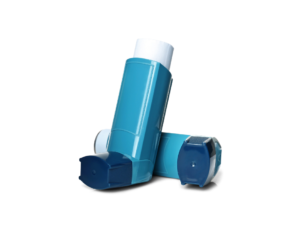
It is important to note that even the most effective medication cannot work properly if it is not delivered correctly. Consequently, studies consistently show that incorrect inhaler technique is one of the leading causes of poor asthma and COPD control. Furthermore, the type of device matters just as much. As a result, metered-dose inhalers, dry-powder inhalers, Respimat devices, and capsule-based inhalers each require slightly different techniques.
Common mistakes include:
Physicians frequently review inhaler technique during appointments, and clinical experience shows that simply correcting technique can significantly improve symptoms.
Side effects of all type of inhalers vary depending on the inhaler class.
Rescue inhalers, particularly short-acting beta agonists such as Ventolin and Bricanyl, may cause:
Nevertheless, these effects are usually temporary and often improve as the medication wears off.
Anticholinergic inhalers may cause:
These effects are usually mild, but patients should contact their healthcare provider if they become persistent or troublesome.
Maintenance inhalers may cause side effects depending on whether they contain an inhaled corticosteroid, a long-acting bronchodilator, or both.
Possible side effects include:
Patients using steroid-containing inhalers should rinse their mouth and spit after each dose unless their healthcare provider has instructed them otherwise. This helps reduce the risk of oral thrush and throat irritation.
There is no single inhaler that is ideal for every patient. The best inhaler depends on the person’s diagnosis, symptoms, frequency of flare-ups, lung function, other medical conditions, age, inhaler technique, and ability to use a specific device correctly.
For example, for patients with occasional asthma symptoms, a short-acting reliever inhaler may be part of the treatment plan. However, patients who need a rescue inhaler frequently may require a controller medication to reduce airway inflammation and prevent worsening symptoms.
For people with COPD, long-acting bronchodilators such as LAMAs, LABAs, or LAMA/LABA combinations are often used to improve day-to-day breathing and reduce flare-ups. Patients with asthma may require inhaled corticosteroids, either alone or in combination with a long-acting bronchodilator, to control airway inflammation.
However, only a healthcare provider will choose the type of inhalers best for you based on an individualized assessment. Similarly, patients should not switch, stop, or share inhalers without medical advice.
Patients should seek medical attention if:
Increasing rescue inhaler use is often an early warning sign that asthma or COPD control is worsening.
In conclusion, the key to successful treatment is understanding the type of inhalers, purpose of each inhaler, using it correctly, and following the treatment plan recommended by a healthcare provider. Finally, with proper medication use and regular follow-up, many patients can achieve excellent symptom control and maintain an active lifestyle.

