- Open:Weekdays: 8:30 am – 5:30 pm, Saturdays: 9:00 am-2:00 pm
- Email: info@youdrugmart.com
- Follow:
-

-


Many of us wonder what is the difference between ibuprofen and acetaminophen, when they both serve the same purpose. Walk down the pain relief aisle and two names show up on almost every shelf: ibuprofen and acetaminophen. They sit side by side, they treat many of the same complaints, and plenty of people grab whichever box is closer. That habit deserves a second look. Both drugs are safe for most people when used correctly. A deeper understanding of ibuprofen vs acetaminophen helps you pick the right one for your pain and your health history.
The Acetaminophen Awareness Coalition notes that acetaminophen is an ingredient in more than 600 over-the-counter and prescription medicines, so it’s surprisingly easy to take too much without realizing it. The Acute Liver Failure Study Group has tied acetaminophen to nearly half of acute liver failure cases in the United States. Ibuprofen has its own warnings. In 2015, the FDA strengthened the label on NSAIDs, the drug class ibuprofen belongs to, to say they can raise the risk of heart attack and stroke. In 2020, it advised avoiding NSAIDs at 20 weeks of pregnancy or later.

Ibuprofen belongs to a group called nonsteroidal anti-inflammatory drugs, or NSAIDs. Naproxen and aspirin are in the same family. You’ll find it sold as Advil and Motrin, and as store-brand generics. Over the counter, it usually comes in 200 mg tablets or capsules.
Ibuprofen does three jobs. It eases pain, brings down fever, and reduces inflammation. That last one matters. If your pain comes with swelling, such as a sprained ankle or a flare of arthritis, ibuprofen goes after the swelling itself and not just the discomfort.
Acetaminophen is known as paracetamol in many countries outside the US. Tylenol is the most familiar brand, and it’s also hiding in plenty of cold and flu products, sleep aids, and prescription painkillers.
Acetaminophen relieves pain and lowers fever. It does very little for inflammation. That sounds like a drawback, but it also means it doesn’t irritate the stomach lining the way NSAIDs can, which makes it a go-to for people who can’t tolerate ibuprofen.
Ibuprofen blocks enzymes called COX-1 and COX-2. Those enzymes help your body make prostaglandins, chemicals that cause pain, fever, and swelling at the site of an injury. Fewer prostaglandins means less of all three. The catch is that prostaglandins also protect your stomach lining and help your kidneys get enough blood flow. Blocking them is what leads to ibuprofen’s stomach and kidney side effects.
Acetaminophen on the other hand, works differently, and scientists still haven’t pinned down every detail. Most of its effect seems to happen in the brain and spinal cord, where it changes how pain signals are processed and helps reset the body’s temperature control. Because it works mostly in the central nervous system and not at the site of injury, it doesn’t fight inflammation in the tissues.
The better choice often depends on what’s causing the pain.
For fever and headaches, both work well, and personal preference is fine. For anything swollen, hot, or injured, ibuprofen usually has the edge.
Both medicines typically start working within 30 to 60 minutes when taken by mouth. However, one main difference between ibuprofen and acetaminophen is that Ibuprofen tends to last longer, about six to eight hours per dose in many people. On the other hand, acetaminophen lasts around four to six hours. That’s why the labels set different gaps between doses.
Neither one works instantly, and taking a second dose early because the first hasn’t kicked in yet is a common way people end up over the limit. Give it the full hour.
Always follow the label on your specific product, but here are the typical adult limits for over-the-counter use.
Ibuprofen: 200 to 400 mg every four to six hours, with a maximum of 1,200 mg in 24 hours unless a doctor directs otherwise. Take it with food or milk to protect your stomach.
Acetaminophen: Extra Strength Tylenol labels list 1,000 mg per dose with a maximum of 3,000 mg in 24 hours. Regular Strength products list 650 mg per dose with a limit of 3,250 mg. Many doctors recommend staying at or below 3,000 mg daily, and lower if you drink alcohol regularly or have liver concerns.
The biggest acetaminophen trap is double dosing through combination products. If you take a nighttime cold medicine and an acetaminophen tablet, you may be getting it twice. Read the active ingredients on every label.
When comparing Ibuprofen vs Acetaminophen in terms of side effects, Ibuprofen can cause heartburn, nausea, and stomach pain. Over time or at high doses, it can lead to ulcers and stomach bleeding. It can also raise blood pressure, cause fluid retention, strain the kidneys, and, as the FDA warns, increase the chance of heart attack or stroke. The risk goes up with higher doses and longer use.
Acetaminophen is gentle on the stomach, but the liver does the work of breaking it down. Taken in the right amounts, that’s no problem. Taken in excess, the liver can’t keep up, and the result can be serious liver damage. Overdose often causes no symptoms at first, which is part of what makes it dangerous. Nausea, vomiting, and yellowing of the skin or eyes can show up later, sometimes after the damage has started.
When comparing ibuprofen vs acetaminophen, several important factors should be considered before choosing the most appropriate option.
Children. Dosing for kids depends on weight, not just age, so check the product label or ask a pharmacist. Acetaminophen can be used in young infants, but any fever in a baby under three months needs a call to the doctor right away. Ibuprofen is generally reserved for children six months and older.
Pregnancy. Acetaminophen has long been the usual first choice for pain and fever during pregnancy, and ibuprofen is best avoided in the second half. Recommendations around medication use in pregnancy continue to be reviewed, so check with your OB before taking either one.
Older adults. Seniors face a higher risk of stomach bleeding, kidney problems, and blood pressure changes from ibuprofen, so many doctors prefer acetaminophen first. Older adults also tend to take more medications, which raises the chance of interactions.
In healthy adults, yes. Because the two drugs work in different ways and are cleared by different organs, doctors sometimes recommend taking them together or alternating them for stubborn pain, such as after dental work or surgery. The key is keeping track. Write down what you took and when, and stay under the daily limit for each one separately. If you have kidney, liver, stomach, or heart conditions, ask your provider before combining them.
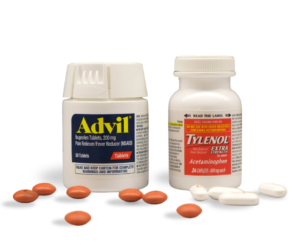
Since most people buy by brand name, here’s how the two best-known products stack up.
Active ingredient. Advil contains ibuprofen. Tylenol contains acetaminophen. That single fact explains almost everything else.
Strength. A standard Advil tablet has 200 mg of ibuprofen. Tylenol comes in 325 mg Regular Strength and 500 mg Extra Strength tablets.
Anti-inflammatory effect. Advil reduces inflammation. Tylenol does not.
Stomach effects. Advil can irritate the stomach, so take it with food. Tylenol is easier on the stomach.
Main organ concern. Advil can affect the stomach, kidneys, and cardiovascular system. Tylenol’s main concern is the liver.
Duration. Advil generally lasts a bit longer per dose than Tylenol.
Combination products. Advil PM and Tylenol PM both add diphenhydramine, an antihistamine that causes drowsiness. Advil Dual Action pairs ibuprofen with acetaminophen in one pill, so don’t take extra Tylenol on top of it.
Cost. Store-brand ibuprofen and acetaminophen contain the same active ingredient at the same strength as the name brands, usually for less money.
Neither brand is better than the other. They’re simply different tools, and the right one depends on your symptoms and health history.
The most common medication mistakes pharmacists see with pain relievers are not dramatic. They’re quiet ones: someone taking ibuprofen on an empty stomach for weeks to manage a bad knee, or someone stacking a cold remedy on top of Tylenol without noticing both contain acetaminophen. Most of these problems are preventable with a little label reading.
To summarize, here’s the difference between ibuprofen and acetaminophen. If pain comes with swelling or inflammation, and you have a healthy stomach, kidneys, and heart, ibuprofen is often the stronger option. If you need something gentler on the stomach, or you can’t take NSAIDs, acetaminophen is usually the safer pick, as long as you respect the daily limit and watch for hidden sources.
Finally, use the lowest dose that works for the shortest time you need it. If you’re taking any one of the medicines for more than a few days, or the pain keeps coming back, that’s a sign to see a doctor for a more detailed examination. Pain is a symptom, and it deserves a real answer. And if you take other medications, have chronic health conditions, or are pregnant, ask your doctor or pharmacist which option fits you best before you open the bottle.

